Tyler Bradshaw shares what makes him passionate about medical physics on SNMMI podcast
At most career fairs, there’s likely not a table for medical physicists – the specialized role that has a significant impact on the future of personalized medicine and treating diseases.
A recent episode of the Society of Nuclear Medicine and Molecular Imaging’s (SNMMI) podcast called “So You Want to Be a Medical Physicist…” highlights the growing field of nuclear medicine and how three medical physicists, including Tyler Bradshaw, PhD, discovered their careers and what makes them passionate about their work.
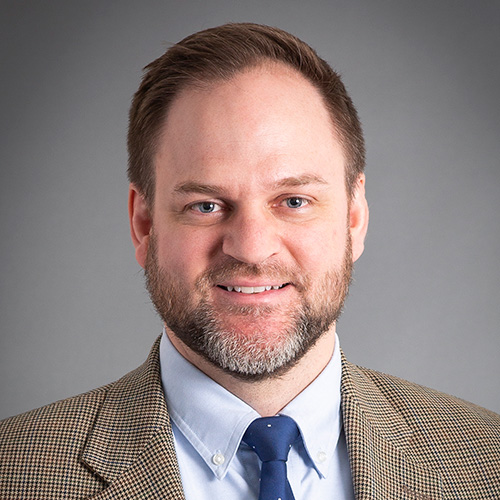
Dr. Bradshaw, associate professor of radiology and medical physics, represented hybrid clinical/research career track. He said his hybrid track can be challenging to balance and advised listeners to “do the work that you’re passionate about” and “carve out space in both the clinic and research.”
Dr. Bradshaw outlined how his responsibilities vary each week as a faculty member with one foot in a clinical space and the other in an active research program. During the week the podcast was recorded, Dr. Bradshaw proctored a final exam for the machine learning course he teaches at the University of Wisconsin–Madison, attended meetings related to research and committees, oversaw PET scanner testing, trained an imaging physics resident, and met with graduate students.
“I did have a passion for being a resource to the clinic…I loved being part of the clinical team,” said Dr. Bradshaw, reflecting on his career track.
But at the same time, he loves research, particularly machine learning.
“I took a machine learning class when I was a graduate student … it opened my mind and I was so passionate about it and that’s been driving me ever since,” Dr. Bradshaw explained.
Now, Dr. Bradshaw’s Learning Algorithms in Radiology Lab focuses on automating the analysis and interpretation of medical images through machine learning. The lab also explores novel methods for combining medical image analysis and natural language processing (NLP) of medical text using multimodal learning.
On the episode, they discuss the impact of artificial intelligence on nuclear medicine and how physicists can be prepared for changes to the field.
For those considering the field, Dr. Bradshaw recommends reading the most recent research, reaching out to mentors, supporting trainees, and keeping in touch with leadership.
Listen to the full podcast episode on the SNMMI’s website.