Sports Imaging and Intervention Research Program

Mission
The Sports Imaging and Intervention research program is a multi-disciplinary team striving to find effective quantitative diagnostic and minimally invasive treatments for common musculoskeletal tendon injuries such as tennis elbow, patellar tendinitis, and Achilles tendinitis including hamstring injuries and cartilage aging. Using a Team Science approach, we incorporate tools such as biomechanical sensors, special ultrasound measurements, and state-of-the-art MRI to stratify disease severity and assess healing response.

NFL Study
UW researchers, including members of the Sports Imaging and Intervention Research Program, are part of a team that was awarded $4 million from the NFL to study hamstring injuries. The study will be using multimodal MRI imaging to better characterize hamstring injuries in athletes with the goal of improving recovery time and producing preventive measurements. The research is a continuation of prior work that used quantitative MR sequence to examine hamstring injuries in the NBA. This new study will be done with four college football teams over multiple years and aims to image 120 athletes at baseline, at injury, and then at the time they return to play. The researchers want to examine imaging markers for potential re-injury.
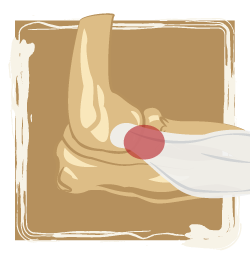
Peak Platelet-rich Plasma Injection Treatment for Chronic Lateral Epicondylitis (Tennis Elbow)
The primary aim of this study is to evaluate the effectiveness of platelet-rich plasma (PRP) as a treatment for chronic lateral epicondylitis (CLE), also known as “tennis elbow”.
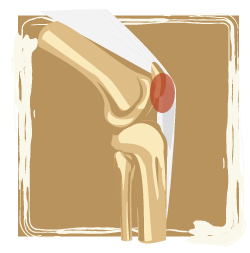
Platelet-Rich Plasma Treatment for Jumper’s Knee
Patellar tendinopathy (PT), also known as Jumper’s knee, is a common disabling tendon injury that is highly prevalent in sports, especially amongst basketball and volleyball players. PT is especially prevalent in elite basketball players and is responsible for significant morbidity both during and after an athlete’s career. In fact, about half of elite athletes affected by PT have to quit their sport. Treatment of PT remains a challenge and conservative therapies often do not help. Since surgery may not be a good option when considering longer recovery times and return to play, a new minimally invasive treatment alternative must be considered.
Platelet-rich plasma, or PRP, is an emerging treatment option using concentrated platelets made from the patient’s own blood containing healing growth factors. Recent exponential use of PRP has been in the area of sports-related tendon overuse injuries such as PT. Currently, it has been estimated that about 100,000 elite athletes are injected with PRP annually, but the frequency of use is likely under reported. The main growth driver came from the media’s attention on well-known professional athletes reporting a quicker and more durable return to activity after PRP rather than foundational evidence-based decisions from a well-designed randomized control trial (RCT). Therefore, we propose a double-blinded RCT to investigate if PRP is effective for treating PT compared to dry needling (without concentrated healing growth factors) and placebo control groups. Positive outcomes from this study would establish an effective non-surgical treatment option for PT and demonstrate that healing changes of the tendon can be followed using new MRI and ultrasound imaging exams.
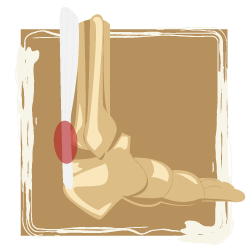
Platelet-Rich Plasma for Achilles Tendinitis – Closed to Enrollment
Achilles tendinopathy (AT) is a common debilitating overuse injury characterized as a degenerative condition resulting from repetitive microtrauma seen in a wide spectrum of people, from the athlete to the middle-aged sedentary individual. To date, there is no consensus nonsurgical treatment for chronic AT and 25-45% of patients eventually require surgery. A promising treatment for overuse injury such as AT called platelet rich plasma (PRP) uses autologous platelets to increase the concentration of endogenous growth factors to promote healing on the cellular level, thereby improving pain and function. Novel ultrasound-based elastography technique called shear wave imaging (SWI) can provide quantitative measurements of tissue stiffness. If validated, US elastographic assessment will be an indispensable tool for quantitative measurement of soft tissue pathology and a low cost method to monitor healing changes and potentially guide therapy. We predict the clinical utility of this one-of-a-kind, non-invasive assessment of biological tissues to be very widespread. Therefore, the purpose of our pilot study is to evaluate SWI as an objective outcome measures for PRP therapy for chronic AT. We hypothesize that PRP treatment will decrease pain and normalize these radiologic assessments over time. This randomized controlled pilot study will compare self-reported AT pain and function with SWI and conventional US outcomes in 20 adult subjects (10 in each of 2 groups) with moderate-to-severe AT, refractory to standard of care treatment, over 24-weeks. Group 1 (PRP) will receive a single injection of PRP. Group 2 (control) will receive no intervention. Self-reported clinical and SWI and conventional US assessments will be obtained prior to injection at weeks 0 (baseline), 12, and 24.
Principal Investigator
Principal Investigator
Affiliated Faculty


Support Staff
PEAK Platelet-rich Plasma Injection Treatment for Chronic Lateral Epicondylitis (Tennis Elbow)
Current Projects | Research Study Details
Posted on Aug 31, 2016 by the Sports, Ultrasound, MRI, Minimally Invasive Treatments (SUMMIT) Lab
Chronic patellar tendinopathy (PT) is a degenerative tendon condition resulting in knee pain, considerable long-term morbidity, and a sedentary lifestyle. Currently, there are no conservative treatments that directly address the underlying functional changes associated with degenerative tissue conditions. Results from other studies reported that platelet rich plasma (PRP) injection therapy for PT resulted in improved quality of life, decreased pain and increased function, and have the potential to modify the disease course at the level of the damaged tendon. These findings have resulted in increasingly common use of PRP in clinical practice. However, PRP has not been rigorously evaluated as a therapy for PT.
Acoustoelastography (AE) is an ultrasound based method developed to analyze the mechanical properties of tendons and ligaments. Currently, elastography is already being used to measure the “hardness” of tissue lesions in order to differentiate tumor from normal tissue. However, this new application is not being used for the musculoskeletal system, whereby tendons, muscles, and ligaments that exhibit changes during injury or chronic degenerative states could be assessed using a cost effective and safe imaging modality. It is hypothesized that acoustoelastography is able to measure these changes to differentiate disease-specific tissue states of tendons, ligaments, or patellar tendon. The AE method can add mechanical information to the conventional ultrasound exam.
The purpose of the study is to determine whether a platelet-rich plasma (PRP) injection improves patella tendon (kneecap tendon) pain. PRP is blood plasma that has been enriched with platelets, a type of blood cell that is a source of growth factors. PRP is sometimes used as a treatment for tendon pain, but is not a proven therapy. A second purpose is to determine whether acoustoelastography (AE) can measure changes in the tissue state of the patellar tendon.
Study is Open through 2023
Eligibility
- Adults between the ages of 16 and 65 years
- Adults who have been diagnosed with chronic patellar tendonitis for at least 3 months
- Adults that have tried other therapies for pain and symptom relief
What is Involved for Participants
If you decide to participate in this research you will first be asked some screening questions by the study team. If you are under 18, we will need to obtain permission from your parent or guardian to conduct the screening with you. If you qualify, you will then be asked to schedule a brief physical examination of your knee to determine if you are eligible. The person conducting the phone screen will schedule this appointment and it will be conducted at the Sports Medicine Clinic at Research Park.
You will then be asked to come to the Wisconsin Institute for Medical Research, 1111 Highland Avenue, Madison, Wisconsin, to provide a blood sample, receive an injection and complete some pain questionnaires. This visit will take approximately 60 minutes. There will be two groups of people participating in this study. One group will be the test subjects and the other will be a control group. The study is blinded which means you will not know which group you are in. The person withdrawing your blood will not know which group you are in. If you are in the control group, you will receive 5 mL of saline solution. If you are in the test group, you will receive 5 mL of your own platelet-rich plasma.
You will also receive questionnaires which you will complete and return in the mail using provided addressed, stamped envelopes, four various times after the injection. It should take approximately 5-10 minutes to complete each of these questionnaire sessions.
The last visit will take place 32 weeks after the injection and will include a follow-up ultrasound and you will be asked to complete the same 3 questionnaires. This will last about 30 minutes.
Your participation will require approximately 2 hours in total.
For more information about this research study, please contact Jan Yakey, RN, CCRC, Senior Clinical Nurse Specialist at
JYakey@uwhealth.org or call (608) 265-3018
This study is part of the Sports Imaging and Intervention Research Program.
Platelet-Rich Plasma Treatment for Jumper’s Knee
Current Projects | Research Study Details
Posted on Sep 23, 2016 by the Sports, Ultrasound, MRI, Minimally Invasive Treatments (SUMMIT) Lab
Patellar tendinopathy (PT), also known as Jumper’s knee, is a common disabling tendon injury that is highly prevalent in sports, especially amongst basketball and volleyball players. PT is especially prevalent in elite basketball players and is responsible for significant morbidity both during and after an athlete’s career. In fact, about half of elite athletes affected by PT have to quit their sport. Treatment of PT remains a challenge and conservative therapies often do not help. Since surgery may not be a good option when considering longer recovery times and return to play, a new minimally invasive treatment alternative must be considered. Platelet-rich plasma, or PRP, is an emerging treatment option using concentrated platelets made from the patient’s own blood containing healing growth factors. Recent exponential use of PRP has been in the area of sports-related tendon overuse injuries such as PT. Currently, it has been estimated that about 100,000 elite athletes are injected with PRP annually, but the frequency of use is likely under reported. The main growth driver came from the media’s attention on well-known professional athletes reporting a quicker and more durable return to activity after PRP rather than foundational evidence based decisions from a well-designed randomized control trial (RCT). Therefore, we propose a double-blinded RCT to investigate if PRP is effective for treating PT compared to dry needling (without concentrated healing growth factors) and placebo control groups. Positive outcomes from this study would establish an effective non-surgical treatment option for PT and demonstrate that healing changes of the tendon can be followed using new MRI and ultrasound imaging exams
Eligibility
- Adults between the ages of 18 and 39 years
- Adults who have been diagnosed with chronic patellar tendonitis for at least 3 months
- Adults that have tried other therapies for pain and symptom relief
What is Involved for Participants
Eligible subjects will possibly undergo the platelet-rich plasma or PRP therapy, will complete 3 research visits over the course of 52 weeks, will complete knee strength testing, questionnaires about symptoms and provide medical history, and will complete 3 ultrasound and 3 MRI scans of your knee.
For more information about this research study, please contact Jan Yakey, RN, CCRC, Senior Clinical Nurse Specialist at JYakey@uwhealth.org or call (608) 265-3018
This study is part of the Sports Imaging and Intervention Research Program.
Platelet-Rich Plasma for Achilles Tendinitis
Current Projects | Research Study Details
Posted on Nov 2, 2016 by the Sports, Ultrasound, MRI, Minimally Invasive Treatments (SUMMIT) Lab
Platelet-rich plasma injection therapy for Achilles tendinopathy: Correlating novel ultrasound-based biomarkers
Achilles tendinopathy (AT) is a common debilitating overuse injury characterized as a degenerative condition resulting from repetitive microtrauma seen in a wide spectrum of people, from the athlete to the middle-aged sedentary individual. To date, there is no consensus nonsurgical treatment for chronic AT and 25-45% of patients eventually require surgery. A promising treatment for overuse injury such as AT called platelet rich plasma (PRP) uses autologous platelets to increase the concentration of endogenous growth factors to promote healing on the cellular level, thereby improving pain and function. Novel ultrasound-based elastography technique called shear wave imaging (SWI) can provide quantitative measurements of tissue stiffness. If validated, US elastographic assessment will be an indispensable tool for quantitative measurement of soft tissue pathology and a low cost method to monitor healing changes and potentially guide therapy. We predict the clinical utility of this one-of-a-kind, non-invasive assessment of biological tissues to be very widespread. Therefore, the purpose of our pilot study is to evaluate SWI as an objective outcome measures for PRP therapy for chronic AT. We hypothesize that PRP treatment will decrease pain and normalize these radiologic assessments over time. This randomized controlled pilot study will compare self-reported AT pain and function with SWI and conventional US outcomes in 20 adult subjects (10 in each of 2 groups) with moderate-to-severe AT, refractory to standard of care treatment, over 24-weeks. Group 1 (PRP) will receive a single injection of PRP. Group 2 (control) will receive no intervention. Self-reported clinical and SWI and conventional US assessments will be obtained prior to injection at weeks 0 (baseline), 12, and 24.
Study runs: Jan 1, 2016 to Jan 1, 2018
Eligibility
- Adults, ages 18-65 with chronic midsubstance Achilles tendon pain for at least 6 months
- Adults who have tried other conservative treatments like rest, ice, NSAIDS, and who have no prior surgery or PRP.
What is Involved for Participants
- Eligible subjects will possibly undergo the platelet-rich plasma or PRP treatment,
- Complete 3 research visits over the course of 24 weeks,
- Complete questionnaires about symptoms and provide medical history, and
- Complete 3 ultrasound scans of the Achilles tendon.
For more information about this research study, please contact Jan Yakey, RN, CCRC, Senior Clinical Nurse Specialist at
JYakey@uwhealth.org or call (608) 265-3018
This study is part of the Sports Imaging and Intervention Research Program.
Wisconsin Institutes for Medical Research (WIMR)
1111 Highland Avenue
Madison, WI 53705-2275