Muhaison Ibrahim receives Howard A. Rowley Scholarship to share how IR procedures may supplement surgical solutions
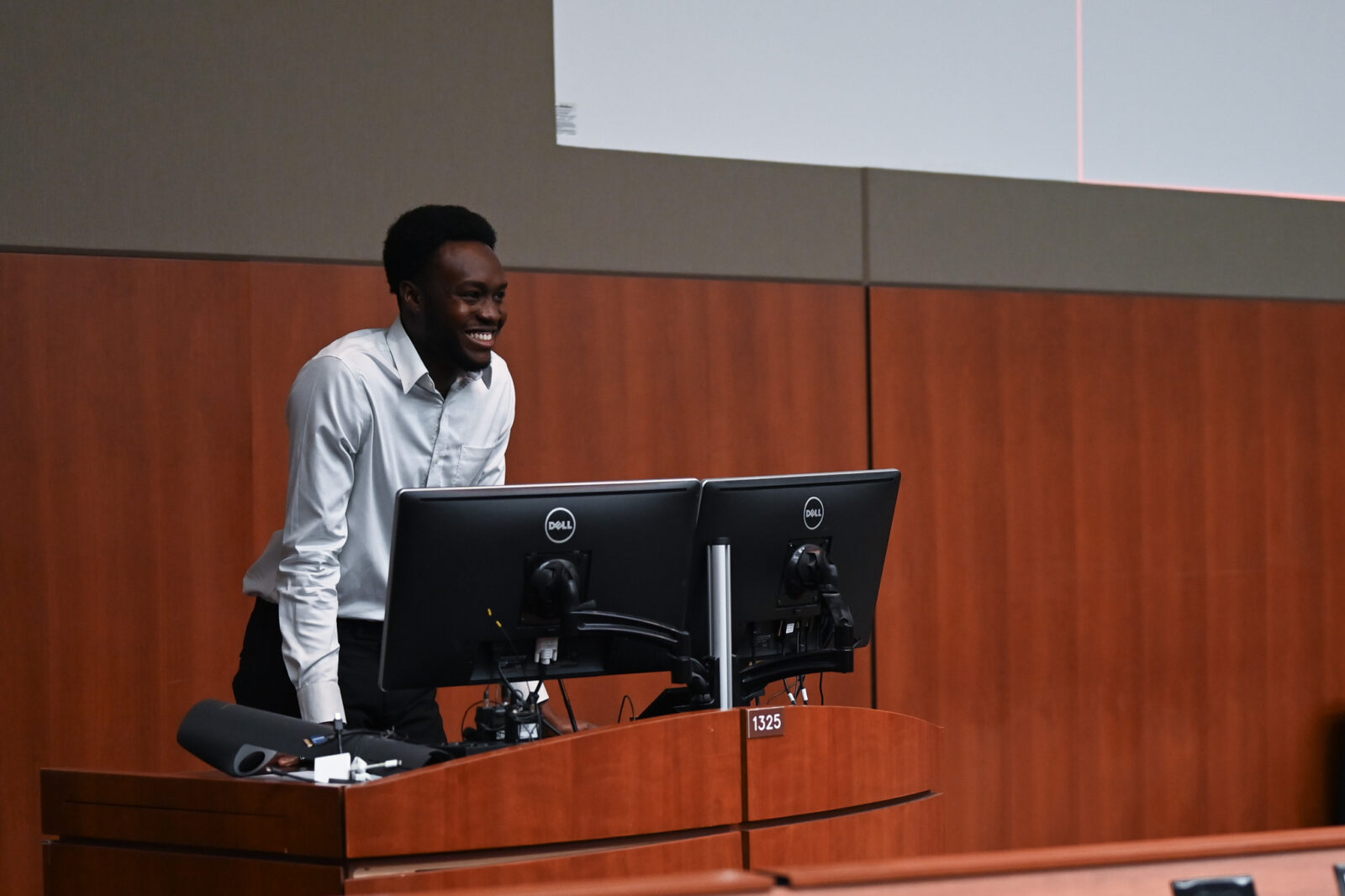
Medical student Muhaison Ibrahim is the latest recipient of the UW Department of Radiology’s Howard A. Rowley Scholarship, a dedicated fund that provides financial support for students to present their research at a national or international conference. This summer, Ibrahim utilized the scholarship funding to present at the National Medical Association (NMA) Annual Convention and Scientific Assembly. Ibrahim has spent the better part of two summers working with faculty mentor Aaron Eifler, MD. Their project examines the impact of prostatic artery embolization (PAE) prior to holmium laser enucleation of the prostate (HoLEP).
PAE is a minimally invasive procedure that shrinks an enlarged prostate by reducing blood flow, while HoLEP surgically removes obstructing prostatic tissue. Supplementing the HoLEP procedure with PAE could increase overall treatment efficacy in patients with very large prostates, as they can present challenges in treatment due to the size and vascularity of the gland. Over the course of the project, Ibrahim and Dr. Eifler focused on the impact of PAE on overall procedural efficiency of HoLEP and perioperative outcomes while also exploring a collaborative treatment strategy between interventional radiology and urologic surgery teams.
Departmental programming makes a lasting impact
The duo first connected through the Radiology Equity Program (REP), a summer research opportunity offered by the department. Ibrahim is interested in the intersection of anatomy, technology, and decision-making in procedural medicine and clinical problems, so interventional radiology research was a natural fit.
“Working with Dr. Eifler gave me an opportunity to see how minimally invasive endovascular procedures can complement surgery rather than simply exist as an alternative, and I found that concept particularly compelling,” he shared. “The project was not just about studying an individual procedure, but about asking whether expertise from different specialties could be combined to approach a difficult clinical problem more effectively.”
While the work and skills gained from the hands-on experience through the program were beneficial, Ibrahim shared that the mentorship he received was incredibly meaningful. “One of the things I value most about REP is that it was not simply a brief exposure to radiology. It connected me with a mentor and a meaningful research question that developed into an ongoing scholarly relationship and ultimately gave me the opportunity to present the work nationally,” he explained.
“Opportunities like this rarely result from one person working independently. They grow from mentors who are willing to bring students into their work, teach them how to ask better questions, and eventually give them the independence to present and defend that work themselves.”
Dr. Eifler shared that Ibrahim’s hard work and dedication were key to the project’s success. “Muhaison’s curiosity and independence stand out. Asking good questions about a new and complicated topic is hard but it’s even harder to then take that newly acquired knowledge a step further to add insight and analysis to a project – and he did both.”
Insight into the research environment
At their core, most research projects start with a question. Turning this question into something that can be studied is one of Ibrahim’s favorite aspects of conducting research. He shared that the pivotal moment from collecting data, to understanding the potential impact on patients and clinical practice, was particularly rewarding. Working on a project that lies at the intersection of interventional radiology and surgery reinforced Ibrahim’s mindset that some of the most interesting clinical questions exist between traditional specialty boundaries. Prior to working with Dr. Eifler, his exposure to radiology was through imaging and image-guided procedures. “Through REP and this project, I saw much more clearly how interventional radiologists participate in clinical decision-making and collaborate with surgeons and other specialists to develop treatment strategies for complex patients.”
Ibrahim encouragers other medical students who are interested in research opportunities to take the plunge – find a clinical question that interests them, and that there’s nothing wrong with starting small. “A summer project, chart review, or unanswered question from clinic can develop into something much larger if you remain curious and take ownership of it,” he emphasized. “Finally, do not underestimate the value of simply reaching out. Many opportunities available to medical students begin with an email, a conversation after a lecture, or asking a faculty member about a problem they are trying to solve.”
Presenting on the national stage
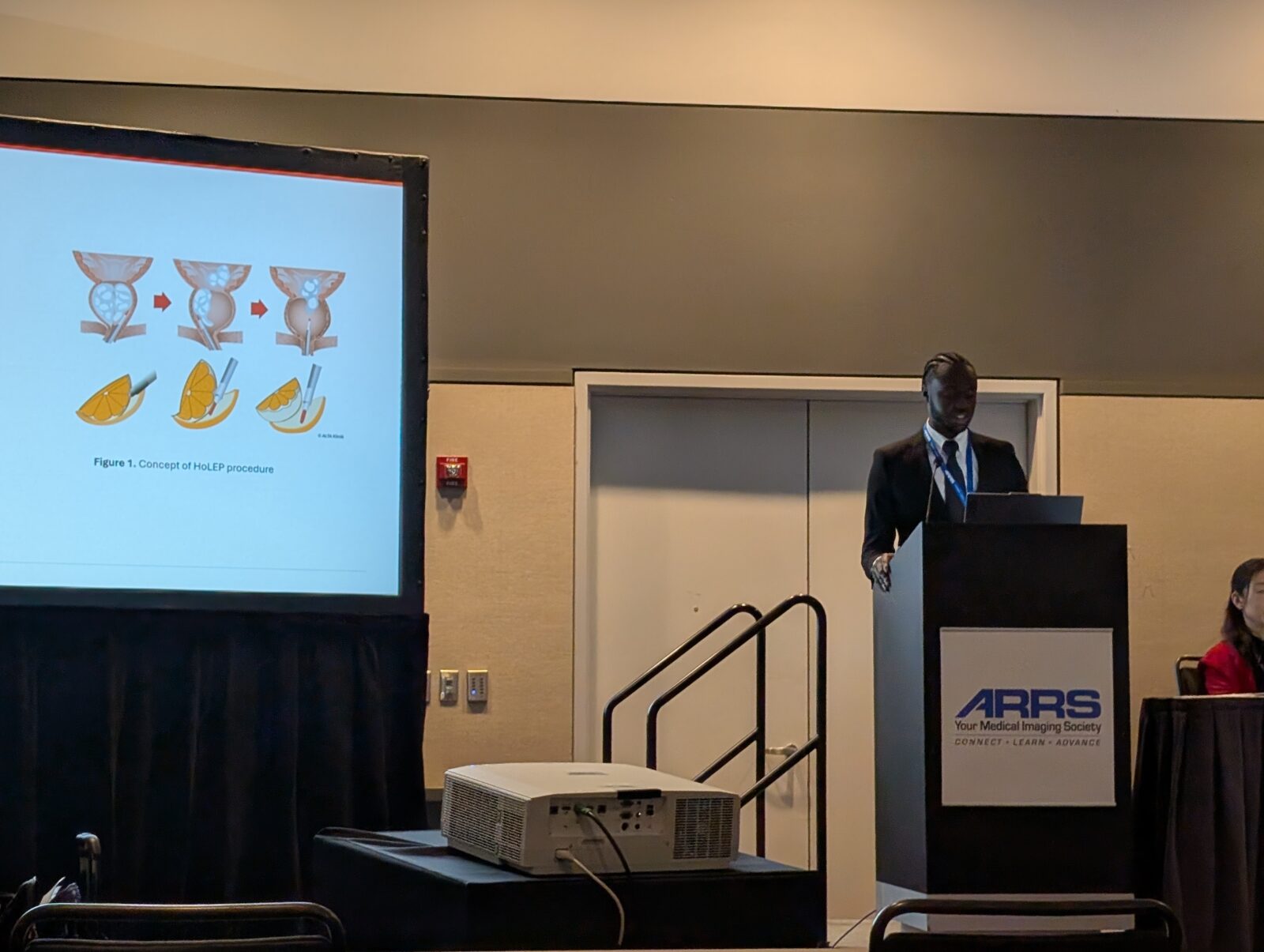
For Ibrahim, the opportunity to share his research with a national audience, and discussing the work with physicians, researchers, and trainees from across the country was a meaningful experience. Gaining exposure to individuals from other institutions, and how they think and approach similar clinical problems with different perspectives was a highlight from the conference.
One of his favorite aspects of presenting is the following discussion, as the audience often poses lines of inquiries that may not have been considered previously and generate ideas for future work. “It was particularly rewarding to see a project that started as a research question between a student and mentor progress to the point where I could present and discuss it nationally,” he reflected. “The Howard A. Rowley Scholarship was important in making that opportunity possible. Conference travel can represent a significant expense for medical students, and having support specifically intended to help trainees disseminate their research made it much more feasible for me to fully participate in the experience.”
Key takeaways
While he’s still deciding which specialty path will be the best fit for him, Ibrahim said this experience allowed him to gain a deeper understanding of the procedural, technical, and collaborative aspects of interventional radiology. He ultimately hopes to pursue neurointerventional or neuroendovascular care and explained how this project helped him get closer to this goal.
“My experience in radiology has been especially valuable because many of the principles that attracted me to interventional radiology – using imaging to understand anatomy in real time, navigating the vasculature, solving complex problems through minimally invasive approaches, and working closely across specialties – are also central to neuroendovascular medicine.”
He also appreciates that he saw the full lifecycle of a research project, from identifying a clinical question, gathering data, interpreting findings, and ultimately presenting this work to a broader audience at the NMA.
“As a medical student, there is something particularly meaningful about realizing that a question you helped investigate can contribute, even in a small way, to a larger conversation about how patients should be treated.”
Ibrahim highlighted that working with the department, and continuity, has been exceptional. “REP provided the initial opportunity to enter the department, work closely with a faculty mentor, and better understand radiology from the inside. The research continued beyond the program, and the Rowley Scholarship then helped me take work that began through REP at UW and present it at the 2026 National Medical Association Annual Convention and Scientific Assembly.”