Katrina Falk receives inaugural Howard A. Rowley Scholarship to share insights on histotripsy treatment
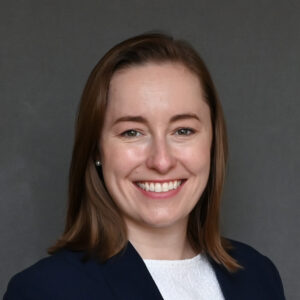
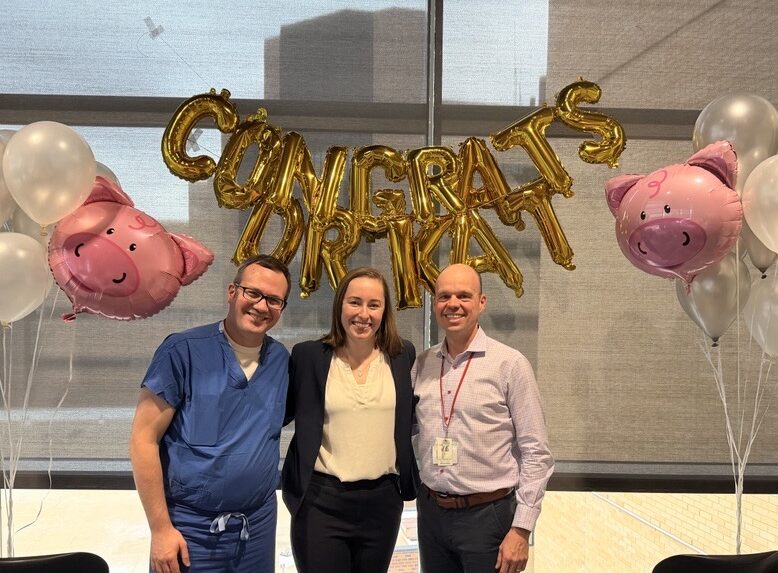
Katrina Falk, PhD is the inaugural recipient of the Howard A. Rowley Scholarship Fund from the UW Department of Radiology. Established in recognition of former Neuroradiology Section Chief Howard Rowley, MD, the fund honors Dr. Rowley’s love of research, passion for travel, and mentorship by providing financial support for a student to present their research at a national or international conference.
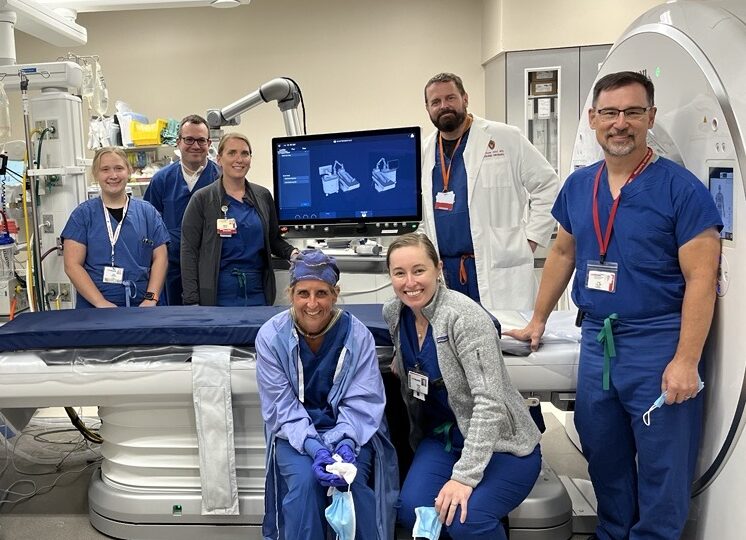
With interests at the intersection of research, engineering, and clinical care, Dr. Falk has contributed her expertise to many areas within the department for over a decade while pursuing her BS and MS in Biomedical Engineering; and now her MD-PhD through the UW School of Medicine and Public Health. Most recently, she’s devoted research endeavors to histotripsy, an emerging non-thermal, non-invasive, and non-ionizing focused ultrasound therapy for the treatment of liver tumors.
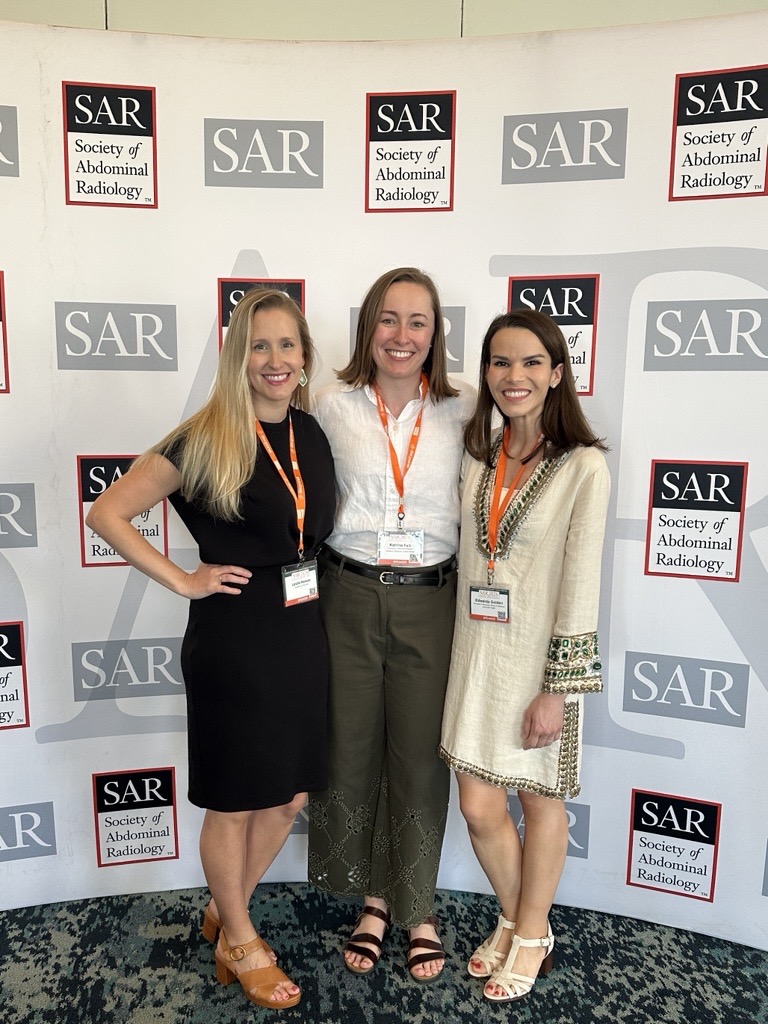
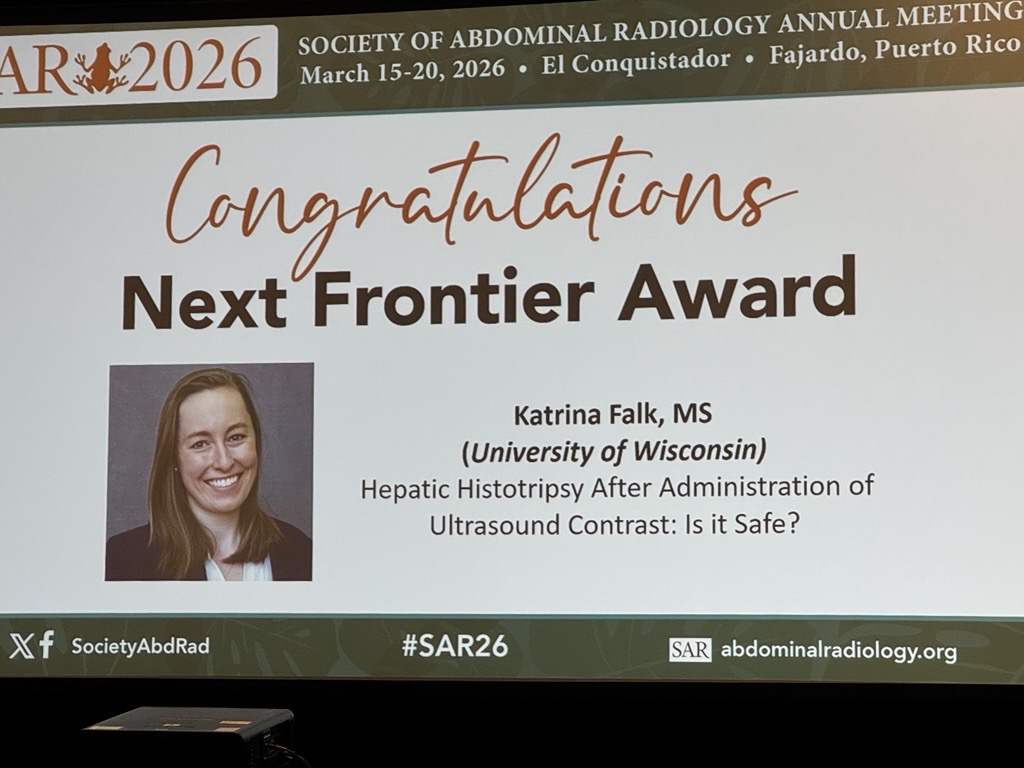
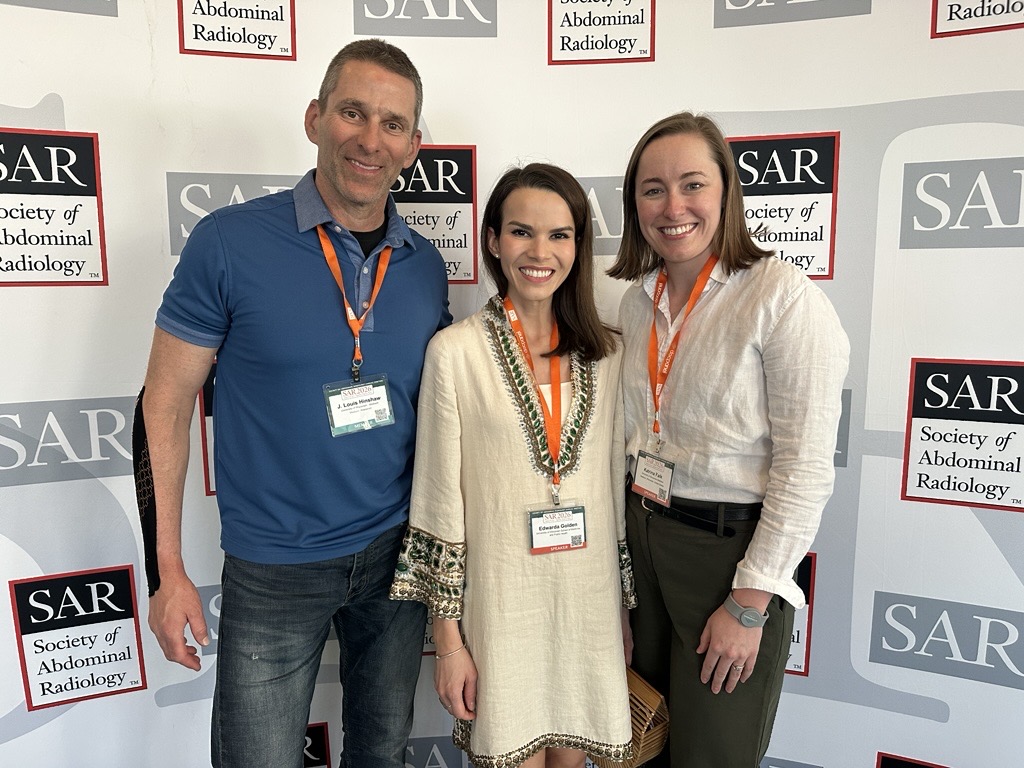
Dr. Falk utilized the scholarship funds to present at the Society of Abdominal Radiology (SAR) annual meeting; sharing her findings on whether it is safe to perform a histotripsy procedure after administering ultrasound contrast. As the lead student, Dr. Falk conceived, designed, and led the research project in all phases, from image collection and analysis to assisting the pathologist reading the histology slides. Ultimately, she found that it is safe to administer ultrasound contrast prior to the procedure. The project has garnered multiple awards, including the Next Frontier Award at the SAR annual meeting and Best Oral Presentation by a Medical Student at the department’s Zachary Clark Radiology Research Symposium.
While completing her master’s degree, two courses; Cancer Bioengineering and Energy-Tissue Interactions resonated with Dr. Falk, piquing her interest in device-based, directed tumor therapies. During her PhD studies, she joined the multidisciplinary Image Guided Interventions Lab led by Paul Laeseke MD, PhD; Martin Wagner, PhD; and Michael Speidel, PhD and collaborated with Timothy Ziemlewicz, MD and Fred Lee Jr., MD to improve image guidance for histotripsy.
Dr. Falk has made numerous breakthroughs to help target liver tumors for histotripsy treatment, as many can’t be targeted due to poor visualization with diagnostic ultrasound. By incorporating contrast enhanced ultrasound to improve guidance, implementing a calibration technique for cone-beam CT, developing new implantable targets, and using deep learning to accurately predict unwanted shifts in the targeted location during the procedure; she has narrowed the gap for clinical treatment.
Dr. Falk reflected on an opportunity to assist Dr. Ziemlewicz in treating a patient by using contrast-enhanced ultrasound to target a tumor for histotripsy, sharing “This was a pivotal bench-to-bedside moment where I saw my research directly help a patient, which motivates me to continue translational research in radiology and engineering.”
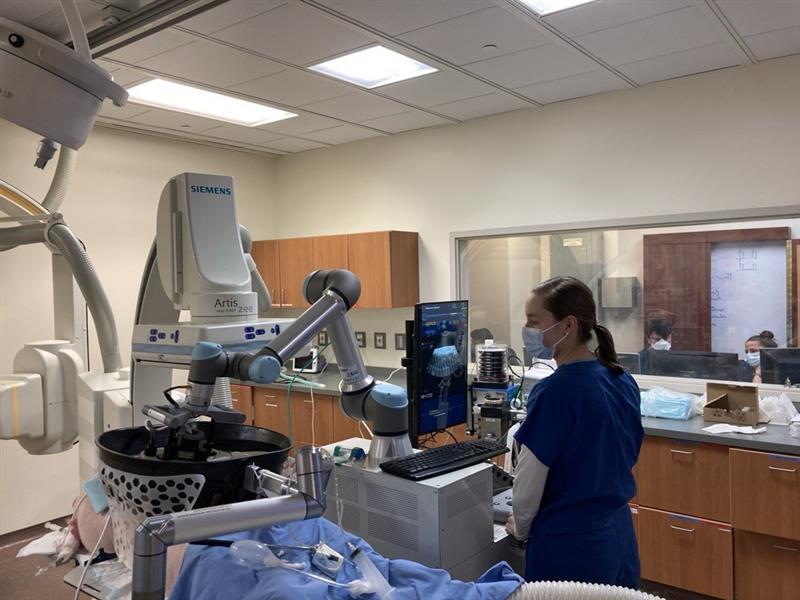
In addition to working in the Image Guided Interventions Lab, Dr. Falk has collaborated with the UW Health Ablation team in both clinical and research opportunities; including participating in the first kidney treatment with histotripsy at UW through the HOPE4KIDNEY trial.
Dr. Falk is looking forward to completing her MD-PhD program and continuing to improve medicine through innovation and research.
“I am instinctively curious and enthusiastic and believe that we can find solutions to healthcare problems! There is a wealth of knowledge in this world, and I think the key is combining it through collaboration across disciplines, experiences, generations, and even campuses,” she explained. “As an engineer, I saw the tendency to over-engineer things or improve them ‘just because you could.’ As a physician in training, I see great physicians identify problems to be solved; however, they don’t know what needs to be done to achieve this. This is the gap I am hoping to fill. Through scientific research, clinical trials, grant funding, collaboration with industry, and great patient care, I hope to continue doing meaningful translational research to impact patients.”