Perry Pickhardt talks opportunistic CT screening on RSNA podcast

Perry Pickhardt, MD‘s interest in opportunistic screening began over two decades ago before AI transformed the field.
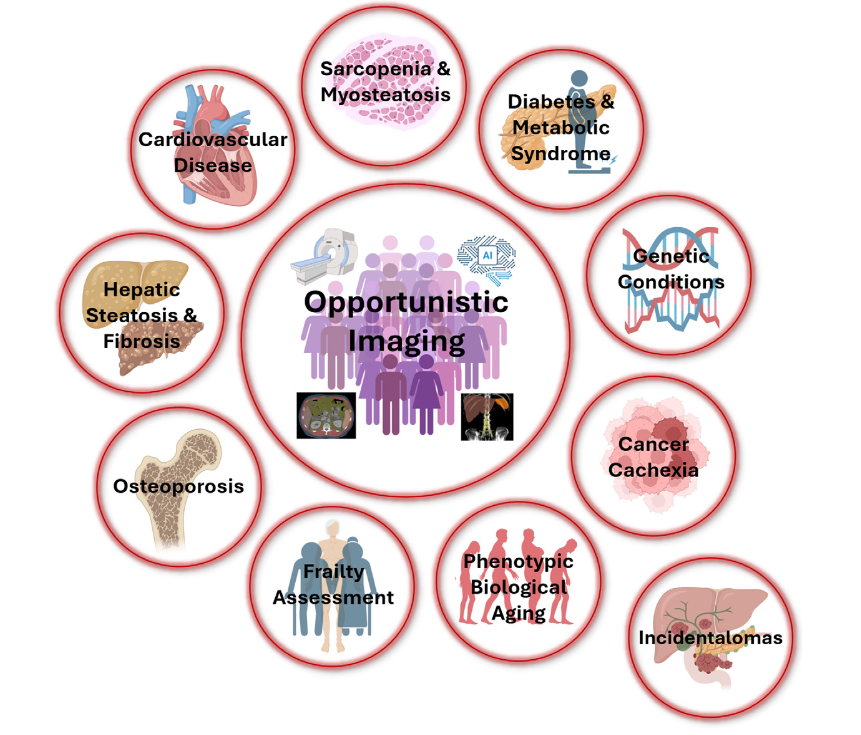
He’s now a major voice in the opportunistic CT screening space and with the concept of value-added imaging. On a recent episode of the Radiological Society of North America’s “Radiology” podcast, Dr. Pickhardt discusses how opportunistic CT screening is transforming routine imaging into a tool for cardiometabolic risk assessment, bone health evaluation, liver disease detection, and body composition analysis.
“Opportunistic CT screening refers to leveraging incidental yet valuable imaging information embedded in all scans, particularly abdominal and chest CTs,” Dr. Pickhardt said on the episode called “How CT-based Screening Is Redefining Prevention.” “This rich body composition data can be harnessed for essentially free cardiometabolic screening, which includes cardiovascular disease, osteoporosis, MASLD (hepatic steatosis & fibrosis), sarcopenia, and others.”
Dr. Pickhardt points out that this is distinct from “incidentalomas,” which can lead to unnecessary follow-up testing.
Prior to the widespread use of AI, Dr. Pickhardt said opportunistic screening was not popular because the assessment was largely manual. But now AI automates these “onerous measures,” allowing for population-based assessments and the ability for prospective evaluation at the individual level.
“All of the automated measures in our AI pipeline are explainable or understandable, reflecting what a manual measurement could provide,” Dr. Pickhardt said. “We continue to favor this explainable approach as we believe the results will be more accepted and understood by patients and their providers compared with an opaque ‘black box’ approach.”
The podcast episode builds off of a “How I Do It” feature published by RSNA and written by Dr. Pickhardt; Mathew Lee, MD; Joshua Warner, MD, PhD, CIIP; and John Garrett, PhD in addition to the NIH’s Ronald Summers, MD, PhD.
In the publication, they contend that opportunistic CT screening can “add substantial value, be cost saving, and provide a new level of personalized precision medicine befitting the dawning AI information era” if properly implemented.
Also on the podcast episode, Dr. Pickhardt discusses the future of CT-based biological age and why value-added imaging has the potential to reshape preventive care.