Joseph Sackett remembered as a revolutionary radiologist, respected leader
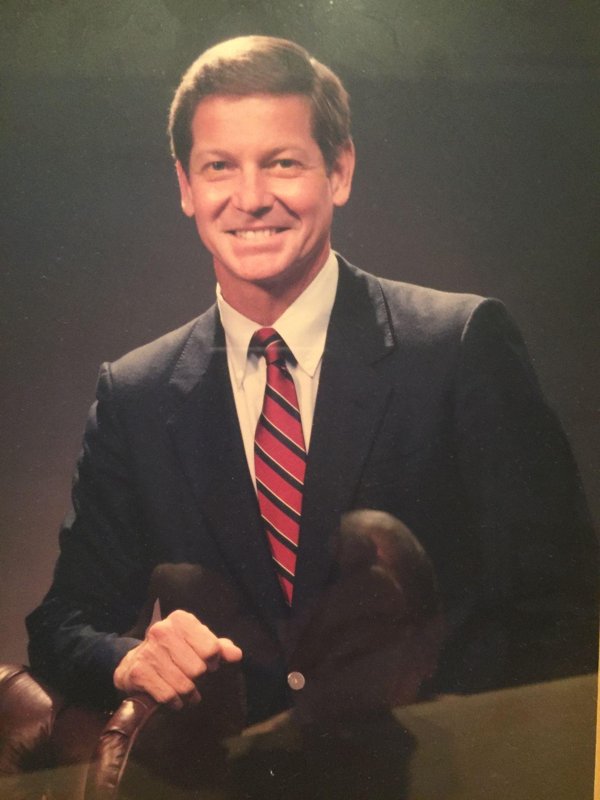
Joseph Sackett, MD, a revolutionary radiologist and responsive department chair, died on Oct. 15, 2026.
Dr. Sackett first arrived at UW–Madison in 1974 and became chair of the department in 1981, remaining at the helm for 15 years. During that time, he restructured the department to focus on emerging subspecialities, leveraged emerging technology, and supported department members’ research interests and work-life balance by implementing parental leave.
“Joseph Sackett had an indelible impact on the Department of Radiology,” Chair Scott Reeder, MD, PhD said. “His thoughtful approach to leadership and commitment to faculty and trainees are the reason our department flourished during his tenure.”
Dr. Sackett’s colleagues remember him leading the department with kindness and propelling the UW Department of Radiology to greater national and international prominence by adding specialized sections and investing in faculty.
Tabassum Kennedy, MD, the current Joseph F. Sackett Professor of Radiology, described Dr. Sackett as a quiet, constant presence who kept in touch with her and engaged in the department even after his retirement.
“Over the past seven years, his encouragement, kind words, and genuine interest in my career meant a great deal to me,” Dr. Kennedy said. “I feel fortunate to have built my career at UW, and I am grateful for the role he played in my professional growth. It is an honor to carry his name through this professorship.”
Patrick Turski, MD, who succeeded Dr. Sackett as chair in 1996, described Dr. Sackett as a superb clinical neuroradiologist and bon vivant, who maintained a robust clinical practice, academic program and social life, traveling, sailing, dancing, and “just enjoying life.” Dr. Sackett set a high bar for his colleagues, above all by promoting excellence in clinical practice.
The way that Dr. Sackett treated his colleagues, especially those who had recently joined the department, made a lasting impression. Fred Lee, Jr., MD recalled how Dr. Sackett supported his work from his very first days at UW–Madison.
“He was kind to me from day one,” said Dr. Lee, who was recruited by Dr. Sackett. “He asked me what I needed to succeed, and he delivered. This was not the model of a relationship between a new junior faculty member and a chair that that I had seen before, so I was a bit shocked.”
‘Commitment to excellence’
Dr. Sackett received his medical degree from Tulane University, interned at Hitchcock Memorial Hospital in Hanover, New Hampshire, and completed fellowships at Ulleval Hospital in Oslo, Norway, and Cornell Medical Center in New York.
He was the first radiologist in North America to use metrizamide as a contrast agent for spine imaging. Dr. Sackett’s landmark 1977 paper demonstrated the safety and efficacy of metrizamide, which was considered a great improvement over the previous oil-based agent. Modern-day metrizamide techniques are still based on his research.
He also co-authored the textbook “New Techniques in Myelography.”
Dr. Sackett worked closely with Charles Mistretta, PhD in developing digital subtraction angiography (DSA). He even volunteered as a test subject, though he suffered a minor allergic reaction to the contrast solution.
A major challenge in DSA was moving the technology from the laboratory to patients. Dr. Sackett worked with Dr. Mistretta and Charles Strother, MD to adapt the Digital Video Image Processor (DVIP) – a tool that made it possible to digitize and adjust X-ray images – for intravenous angiographic studies.
Dr. Sackett served as president of the American Society of Neuroradiology from 1989-90. Dr. Sackett was instrumental in developing the Certificate of Added Qualification (CAQ) in neuroradiology, which is a board-certified subspecialty credential that was recognized by the American Board of Radiology in 1992.
Dr. Sackett encouraged people to elevate their knowledge of neurological, head and neck, and spinal diseases and take full advantage of the evolving technologies of the day, like CT and MR.
“They were relatively new, but it was clear that they were going to have a huge impact,” Dr. Turski said. “He wanted to make sure these technologies were used appropriately to advance patient care.”
Department leader
During his time as chair, he positioned the department to be a leader in the emerging field of MRI technology.
In 1984, the department installed the first MRI machine on campus as part of a collaborative research program with General Electric Medical Systems, now known as GE HealthCare. Previously, researchers traveled to GE’s facility in Waukesha, Wisconsin to access equipment.
Dr. Sackett also oversaw the creation of additional subspecialities in response to advances in medical imaging technology. By 1995, the department expanded to 10 sections, including skeletal, angio/interventional, neuroradiology, pediatrics, mammography, chest, Veteran’s Affairs radiology, nuclear medicine, MRI and body imaging.
Today’s 14 sections include most of those created when Dr. Sackett was chair, though some have been renamed to accommodate changes in medical terminology or additional subspecialties.
Dr. Sackett responded to faculty needs by creating policies to support parents. At a time when the field was seeing an increase in women joining, he helped establish the first departmental pregnancy policy, granting up to four weeks of paid maternity leave for residents. He later implemented a one-week paternity policy.
During his time as chair, Dr. Sackett recruited faculty who could build on the strong base of clinicians already at the department and prioritized academic time. At the time, most radiology departments were clinical departments, and National Institutes of Health funding for radiology was scarce.
“(Dr. Sackett) was a visionary in the sense that he was able to see the value of supporting and developing faculty members who would establish their own research programs,” Dr. Turski said.
Dr. Sackett was also peripherally involved in developing the National Institute of Biomedical Imaging and Bioengineering, which is dedicated to the development of imaging technologies, according to Dr. Turski. His impact reverberated through national organizations, including the American College of Radiology, the American Board of Radiology, and the NIH.
Dr. Sackett’s emphasis on setting aside time for research benefited Dr. Lee, who came to him with the proposal to start tumor ablation. Dr. Lee had returned from an RSNA conference where he learned about this technique and was energized to start a program at UW.
“I thought that this is clearly the future of medicine with minimally invasive treatment of tumors, and we just have to get into this,” Dr. Lee said. “This was a very radical idea for its time.”
Dr. Sackett didn’t shy away from the cutting-edge idea. Instead, he helped Dr. Lee acquire the necessary equipment by forging a partnership with the Department of Surgery to split the cost.
“It grew into a really nice collaborative arrangement between departments that has lasted to this day. (Dr. Sackett) had that vision from the beginning, rather than going in as just a single department,” Dr. Lee said. “Since that time, we’ve developed an international program in tumor ablation.”
Right people, right spirit
Dr. Sackett’s influence on the department also lives on through the Joseph F. Sackett Professorship in Radiology, which was created in his honor to support the Section of Neuroradiology chief.
Prior to Dr. Kennedy, Howard Rowley, MD held the inaugural professorship in Dr. Sackett’s name.
“To have that kind of name even loosely attached to me was a real honor,” Dr. Rowley said.
Dr. Rowley recalled Dr. Sackett’s foundational presence in the department as a neuroradiologist and his worldwide reputation as a speaker in addition to allocating resources for research.
“He had that tradition of not just valuing research but really putting teeth behind the mission of research by giving people actual time and money,” Dr. Rowley said.
Exploring topics of interest and keeping the “clear, blue flame of science burning” leads to a more fulfilling career, Dr. Rowley said. “Dr. Sackett’s tradition and his professorship really helped me in those ways.”
Finally, Dr. Rowley remembered Dr. Sackett building an esprit de corps that made the department feel like family.
“It helps to have the right people and the right spirit, and I think a lot of that came down from Dr. Sackett,” he said.
Read more about Dr. Sackett’s life and legacy in his obituary.